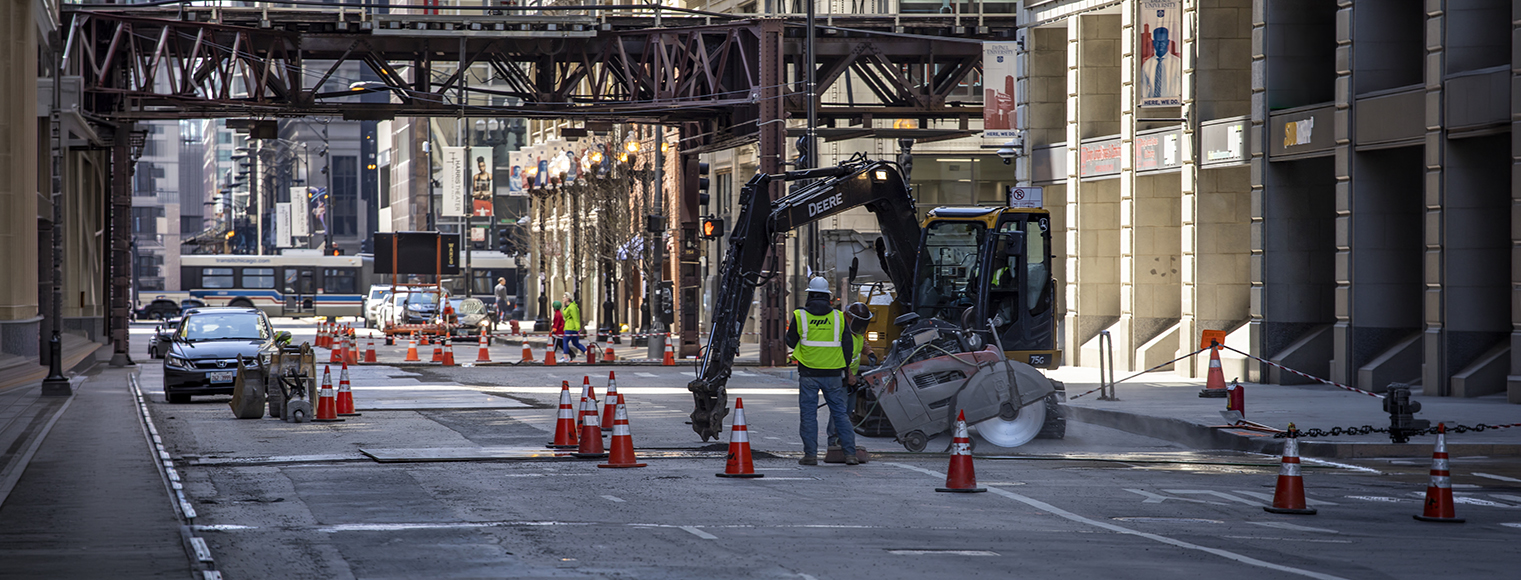
A lane shift with no warning. A cone line that funnels two lanes into one at highway speed. A drop-off between the old pavement and the new with nothing marking it. Road construction causes crashes, and the driver who hits one is not always at fault.
The numbers back it up. The FHWA reports that at least two people are killed in road construction zones every day nationally.
A road construction accident attorney looks beyond the two drivers involved. When a construction zone was built incorrectly, improperly signed, or left in a dangerous condition overnight, the contractor and the agency that hired them may share responsibility for the resulting construction accident.
Our Chicago car accident attorneys handle these cases across Illinois, Indiana, and Wisconsin.
In this post, you’ll learn:
- Who is liable when road construction causes a car accident
- What makes a construction zone legally dangerous rather than just inconvenient
- What to do in the days after, and how a claim works
- What Illinois deadlines apply, including against government entities
Who Is Liable When Road Construction Causes a Car Accident?
Rarely just the drivers. A construction accident in a work zone usually has more than one responsible party, and the crash report almost never names all of them.
Illinois sees this constantly. The state averages about 6,195 work zone crashes a year with more than 1,000 injuries, and preliminary figures put 2025 work zone fatalities at 35.
Contractors, Property Owners, and Government Entities
Four categories of defendant show up in these cases:
- The general contractor. Responsible for traffic control, signage, barriers, and how the zone is set up each day.
- Subcontractors. The company that actually placed the cones, striped the lane shift, or left equipment where it did not belong.
- Government entities. IDOT, a county, a city, or the Tollway, depending on who owns the road and approved the plan.
- Property owners and equipment manufacturers. Less common, though a defective barrier or a private drive feeding into a work zone may put them in it.
Safety regulations decide most of these cases. Illinois work zones follow federal traffic control standards, and a zone that departs from them without justification is where clear liability starts to appear.
Negligent drivers are still in the picture. Fault is sometimes shared, and a driver who was speeding through a poorly signed lane shift may bear part of it while the contractor bears the rest.
What Makes a Work Zone Legally Dangerous
Inconvenience is not negligence. A work zone that slows you down and frustrates you is doing its job. One that hides a hazard is a different thing, and the difference is what a claim turns on.
| The problem | Why it creates liability |
| No advance warning | Drivers get no time to react to a lane closure or shift |
| Missing or wrong signage | Speed limits, merge points, and detours have to be posted correctly |
| Unmarked drop-offs | A pavement edge between old and new surfaces can pull a wheel |
| Cones or barrels out of position | A channel that leads into a hazard rather than around it |
| No lighting at night | Zones left in dangerous conditions after crews leave |
| Equipment or debris in travel lanes | Anything left where drivers are expected to be |
| Uncovered or unmarked excavation | Open cuts adjacent to live traffic |
Photograph it before it changes. A construction accident scene is reconfigured the next morning, and the layout that caused the crash may no longer exist by the time anyone investigates.
The property damage tells part of the story too. When a vehicle strikes a barrier, sign, or drop-off, a sign often shows what the driver could and could not see.
What Construction Accident Victims Should Do After a Crash
The construction site changes fast. Cones move, signs go up, and the layout that caused the crash is gone by the next shift, which makes the first 48 hours the whole case.
Do these in order:
- Get medical attention. Serious injuries in work zone crashes often present late, and a gap in treatment becomes an argument later.
- Photograph everything before you leave. Signs, cones, barriers, the pavement edge, the lighting, and how far back the first warning sign sat.
- Get the accident reports. The police report and any incident report the contractor filed internally.
- Identify the contractor. Company names on trucks, signs, and equipment tell you who was working that stretch.
- Interview witnesses while they are there. Other drivers and workers who saw the layout that day.
Say nothing to the insurance company beyond the basics. Construction accident victims get called quickly, and the questions are built to establish that the driver simply failed to slow down.
Catastrophic injuries change the timeline. When someone is hospitalized, a family member should do this work because the evidence does not wait for anyone to recover.
What a Construction Accident Claim Can Recover
Two categories, and the second is usually larger. Economic damages are the ones with receipts. Non-economic damages are what a jury awards for losses not covered by receipts.
Economic damages in a construction accident claim include:
- Medical bills already paid, plus the medical costs of ongoing treatment
- Lost wages during recovery and lost income going forward
- Diminished earning capacity when the injuries are permanent
- Property damage to the vehicle
Non-economic damages cover pain, emotional distress, and permanent disability. Those are harder to quantify and often exceed the medical expenses, particularly when someone cannot return to the work they did before.
Punitive damages are rare and possible. A contractor who knew a work zone was unsafe and left it that way anyway is a different case from one who made an ordinary mistake, and Illinois allows a jury to consider that difference.
Wrongful Death and Construction Accident Injuries
Fatal work-zone crashes result in a separate claim. A wrongful death action belongs to the surviving family rather than to the estate, and it covers the loss of support and the relationship itself.
Construction accident injuries that fall short of fatal may still be catastrophic. Internal trauma, spinal damage, and brain injury all carry lifetime costs, and our brain injury attorneys see how badly those get undervalued early.
Construction Workers Hurt in the Same Work Zones
The crash that hurt you may have hurt someone else. Construction workers stand a few feet from live traffic all day, and a driver who comes through the cones hits whoever is closest.
Their claim runs on a different track. An injured worker receives workers’ compensation benefits from their employer regardless of fault; these benefits cover medical care and a portion of lost wages but do not cover pain.
When Injured Workers Have a Second Claim
Workers’ compensation is not the whole recovery. A worker struck by a negligent driver or injured by a defective barrier may also bring a third-party claim against whoever caused the injury, and that claim covers what comp does not.
Unsafe working conditions on the construction site may support the same kind of claim. When a general contractor ignores safety regulations and both a driver and a worker get hurt, the same evidence often supports both cases.
Illinois Deadlines and a Construction Accident Lawsuit
Two years for most claims, and far less against the government. Illinois law gives you two years from the date of injury to file a construction accident lawsuit against a private contractor.
Government entities are the trap. A claim against IDOT, a municipality, or another public body runs on a shorter track with its own notice requirements, and missing that step ends the case before the two-year clock matters.
Why the Legal Process Starts Sooner Than the Deadline
Evidence has its own timeline. Traffic control plans, daily inspection logs, and the contractor’s own incident reports all exist somewhere, and none of it stays available for two years.
Preserving your legal rights means moving before the deadline pressures you. Legal action filed at the twenty-three-month mark is filed on time and usually built from far less than it could have been.
What a Road Construction Accident Attorney Does
The contractor’s insurer is already working. Adjusters reach the scene faster than anyone else, and the version of events they build is the one that sticks unless someone builds another.
Where the work happens:
- Preserving the work zone record. Traffic control plans, daily logs, inspection reports, and change orders showing what the layout was supposed to be.
- Identifying every defendant. A road construction accident attorney names the general contractor, the subs, and the agency, because the one on the sign is rarely the only one liable.
- Getting the scene documented before it changes. Photographs, measurements, and sightline analysis of a zone that will look different tomorrow.
- Valuing the whole claim. Not just the medical bills on the table, but the ongoing treatment and lost earning capacity that show up later.
Construction accident lawyers work these on a contingency fee basis, so the review costs nothing and attorney fees come out of the recovery rather than your pocket. A firm with a track record in construction accident cases knows which documents exist and how quickly to request them.
Common Questions About Road Construction Accidents in Illinois
Can you sue a construction company for a car accident in a work zone?
Yes, when the work zone itself contributed. Personal injury cases against contractors turn on whether the traffic control, signage, or site conditions departed from what the plan required.
Who is responsible if there was no warning sign before a lane closure?
Usually the contractor responsible for traffic control, and sometimes the agency that approved the plan. A road construction accident attorney will pull the traffic control plan to see what was supposed to be posted and where. The gap between the plan and the actual layout is common.
What if I was speeding when the crash happened?
You may still recover. Illinois reduces your recovery by your share of fault rather than barring it, so a driver found 30% responsible still recovers 70% of the damages. Contractors and their insurers argue that percentage is hard, because every point reduces what they pay.
How long do I have to file against IDOT or a city?
Less time than against a private contractor. Claims against government entities have shorter deadlines and separate notice requirements, and missing the notice requirement ends the case regardless of how much time remains on the main deadline.
What if the work zone was empty when I crashed?
It does not matter whether crews were present. A zone left overnight with unmarked drop-offs, missing lighting, or equipment in a travel lane remains a dangerous condition for which someone is responsible. Contractors are required to leave a zone safe when they leave it.
Can I file a claim if the crash happened in Indiana or Wisconsin?
Yes. Deadlines and government claim rules vary by state, so the analysis depends on where the crash occurred. The underlying question of who built the zone and how it was maintained is the same in all three states.
Does a construction accident attorney cost anything upfront?
No. Most personal injury cases are handled on a contingency basis, meaning no fee unless there is a recovery. Case costs are advanced and come out of the settlement rather than your pocket.
Talk to a Personal Injury Lawyer About Your Work Zone Crash
The contractor’s insurer had someone at that scene within hours. The traffic control plan, the daily logs, and the layout that caused the crash are all still available right now, but none of that will be true in six months.
Midwest Injury Lawyers has recovered over $100 million for injury victims across Illinois, Indiana, and Wisconsin. A road construction accident attorney on our team will identify every party responsible for that work zone, not just the driver in the other car.
Contact us for a free consultation. There is no fee unless we win, and we will tell you what your case actually looks like before you decide anything.