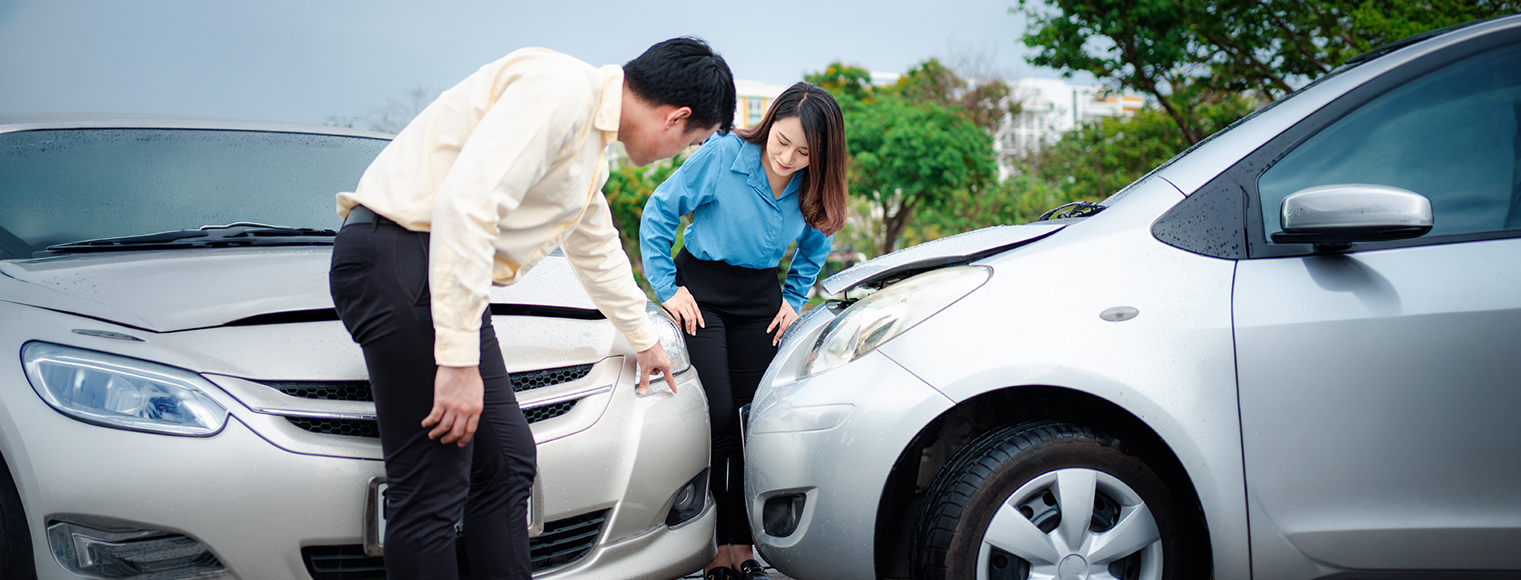
Someone tailgated you for two miles, cut in front, and hit the brakes hard. That is not a normal crash, and a road rage accident is not treated like one.
Almost everyone contributes to the problem. AAA found that 96% of drivers admitted to aggressive driving behaviors in the past year, and 11% went further, acknowledging violent actions like intentionally bumping another car or getting out to confront another driver.
That 11% is where the law changes. Ordinary negligence covers a driver who was careless. A road rage accident involves a driver who meant to do something, and intent affects liability, insurance coverage, and whether criminal charges follow.
Our Chicago car accident attorneys handle these across Illinois, Indiana, and Wisconsin.
In this post, you’ll learn:
- Where aggressive driving ends and road rage begins
- Who is liable when anger causes a crash
- What a victim may recover, and how a claim works
- What criminal charges mean for a civil case
What Counts as a Road Rage Accident?
There is no single legal definition. Road rage is a behavior pattern rather than a statute, and what makes a crash a road rage accident is that one driver acted with intent rather than carelessness.
Road rage encompasses a range of conduct. An enraged driver who brake-checks, blocks, chases, or forces another car off the road is acting deliberately, and courts treat such conduct differently from a missed stop sign.
When Road Rage Becomes a Criminal Offense
Anger alone is not a crime. An angry driver who yells and gestures has done nothing prosecutable, and the line gets crossed when the conduct becomes reckless behavior aimed at another person.
A physical confrontation moves it further. Illinois charges range from reckless driving to aggravated battery depending on what happened, and a rage accident that injures someone is prosecuted as a criminal offense separate from any civil claim.
Aggressive Driving vs. Road Rage
The terms get used interchangeably and mean different things. NHTSA defines aggressive driving as committing a combination of moving traffic offenses that endanger other persons or property.
Road rage is what happens when a driver stops treating the other car as an obstacle and starts treating it as a target.
The behaviors underneath both are deadly on their own. In 2024, speeding alone was a contributing factor in 29% of all traffic fatalities, accounting for 11,288 deaths.
| Aggressive driving | Road rage |
| Traffic offense | Criminal offense |
| Speeding, tailgating, changing lanes without signaling | Chasing, blocking, brake-checking, forcing a car off the road |
| Rude hand gestures and horn use | Physical confrontation, weapons, assault |
| Impatience with traffic generally | Anger directed at one driver specifically |
| Usually negligence in a civil claim | Intentional conduct, which changes coverage and damages |
Most aggressive driving accidents never escalate. The AAA data show that nearly every driver engages in some of the behaviors in the left column, and a small fraction crosses into the right column.
Common Behaviors in a Road Rage Incident
A road rage incident usually escalates in stages. One driver does something ordinary, another takes it personally, and the response invites a bigger response.
What shows up in these cases:
- Tailgating and brake-checking. The most common opening move, and the one that puts two cars at closing speed with no room.
- Blocking or boxing in. An aggressive driver using position to prevent another vehicle from changing lanes or exiting.
- Chasing. Following another car off the highway, sometimes for miles, after the original conflict ended.
- Forcing a car off the road. Deliberate contact or a swerve that leaves the other driver no room to maneuver.
- Confrontation at a stop. Getting out at a light, where a traffic dispute can become a fight.
Obscene gestures and horn use rarely stay contained. Eye contact escalates it further, which is why the standard advice to avoid eye contact with an angry driver is not politeness but self-preservation.
The pattern matters legally. A crash that ends a chase looks nothing like a crash at an intersection, and the sequence of events is often what proves intent behind the wheel.
Who Is Liable for a Car Accident Caused by Road Rage?
The driver who caused it, and sometimes their insurer will fight that. A car accident caused by road rage is still a civil claim, and the aggressor is liable for what the incident cost you.
Intent complicates the insurance side. Auto policies cover negligence, and most exclude intentional acts, so an insurer may argue the conduct was deliberate specifically to avoid paying.
That argument runs counter to their own insured, which is why these claims get contested from unusual angles.
How to Prove Liability in Road Rage Cases
Evidence decides it. Road rage cases turn on establishing the sequence, and several sources usually exist:
- Dashcam footage, from either vehicle or from cars nearby
- 911 calls made before the crash by the victim or by other drivers
- Police reports, particularly if the incident produced a separate criminal investigation
- Witness statements from other cars that watched it develop
- Traffic and business cameras along the route
The criminal case helps the civil one. A conviction establishes facts a civil defendant has trouble disputing later, and even charges that get dismissed leave behind an investigative file worth having.
Criminal Charges and the Civil Case
Two separate proceedings run on different tracks. Criminal charges are the state prosecuting the other driver. Your civil claim is you seeking compensation, and one does not depend on the other.
Illinois law addresses road rage through several offenses. Reckless driving, aggravated assault with a vehicle, aggravated battery, and, in the worst cases, charges involving death, depending on what the driver did and what resulted.
What a Criminal Case Means for Your Claim
A conviction helps, and an acquittal does not sink you. The criminal standard is proof beyond a reasonable doubt, while a civil claim requires only that the driver caused the harm more likely than not.
Do not wait for the criminal case to finish. Prosecutions take months or years, evidence in a road rage incident degrades on its own schedule, and civil deadlines keep running while everyone waits.
What a Road Rage Accident Victim May Recover
The injuries in these crashes tend to be worse. A road rage accident often happens at speed with no braking, because the at-fault driver was not trying to avoid the collision.
A personal injury claim covers what the crash cost you:
- Medical bills already paid, plus the cost of continuing treatment for serious injuries
- Lost wages during recovery, and lost earning capacity when the injuries are permanent
- Pain and suffering, which often exceeds the medical bills
- Emotional harm, which matters more in these cases because the driver targeted you deliberately
Punitive damages become available in a way they rarely are. Ordinary negligence does not support them, and conduct that a jury finds deliberate sometimes does.
A passenger has a claim too. Anyone injured in either vehicle may pursue compensation, and a passenger in the aggressor’s own car is often the most sympathetic plaintiff in the case.
How to Drive Defensively and Avoid Escalation
Nothing in this section is a legal obligation. A driver who was targeted is not at fault for failing to de-escalate, and these are practical steps rather than a standard anyone is held to.
What actually works:
- Give the aggressive driver the road. Let them pass, change lanes, take the next exit. Winning the exchange is worth nothing.
- Avoid eye contact. Looking at an angry driver is read as engagement and reliably escalates it.
- Do not gesture back. The response is what turns an irritation into a pursuit.
- Drive to a police station or a busy public place. Never home, and never a quiet street.
- Call 911 while it is happening. That call creates a time-stamped record before any crash occurs.
Distance solves most of it. A few hours of frustration in traffic is survivable, and the motor vehicle behind you stops mattering the moment there are three cars between you.
Manage what you control. Leaving earlier, keeping relaxing music on, and treating traffic safety as a matter of arriving rather than winning are the boring answers, and they work.
What a Road Rage Accident Lawyer Does
Proving intent is the whole job. An ordinary crash claim asks whether a driver was careless. A road rage accident lawyer has to show the other driver meant it, and that evidence disappears within days.
Where the work happens:
- Securing footage before it overwrites. Dashcams, business cameras, and traffic cameras along the route, most of which recycle within two weeks.
- Getting the 911 audio and the police file. Including any criminal investigation, which contains statements the civil defendant would rather not repeat.
- Handling the intentional-act exclusion. Insurers use it to deny coverage, and a personal injury attorney knows which theories keep the claim inside the policy.
- Building the damages fully. Serious injuries, emotional harm, and the punitive exposure that deliberate conduct creates.
Legal representation costs nothing upfront. Injury lawyers work on contingency, and knowing your legal rights early is what keeps an insurer from resolving the claim on their terms.
Common Questions About Road Rage Accidents
Is road rage a criminal offense in Illinois?
There is no statute called road rage. Depending on what happened, the conduct is prosecuted as reckless driving, aggravated assault with a vehicle, or aggravated battery, and a criminal case runs separately from your civil claim.
Will insurance cover a road rage accident?
Usually, though it gets contested. Auto policies exclude intentional acts, so an insurer may argue the driver meant to hit you specifically to avoid paying. A road rage accident lawyer works around that exclusion rather than into it.
What if the other driver was never charged?
The civil claim proceeds anyway. Prosecutors decline cases for reasons unrelated to what happened, and the civil standard is lower than the criminal one.
How do you prove the other driver did it on purpose?
Sequence and evidence. Dashcam footage, 911 calls, witness statements, and the physical evidence of where and how the contact occurred all establish that the collision was chosen rather than accidental.
Can a passenger file a claim after a road rage crash?
Yes, including a passenger in the at-fault driver’s own car. Anyone injured has a claim against whoever caused the crash.
What should I do if a driver is following me?
Do not go home. Drive to a police station or a busy area, call 911 while it is happening, and stay in the car. A personal injury attorney would rather have your 911 call than your account of it later.
How long do I have to file after a road rage accident in Illinois?
Two years from the date of injury for most personal injury claims. Waiting costs evidence long before it costs the deadline, since footage and witness memory both degrade quickly.
Talk to a Personal Injury Attorney About Your Crash
The footage that proves what the other driver did is already on a countdown. Business cameras recycle in days, dashcams get overwritten, and the witnesses who watched it happen are strangers nobody has identified yet.
Midwest Injury Lawyers has recovered over $100 million for injury victims across Illinois, Indiana, and Wisconsin. A road rage accident is a harder claim than an ordinary crash, and it is worth more when someone proves the injuries were caused on purpose.
Contact us for a free consultation. There is no fee unless we win, and we will tell you what your case actually looks like before you decide anything.