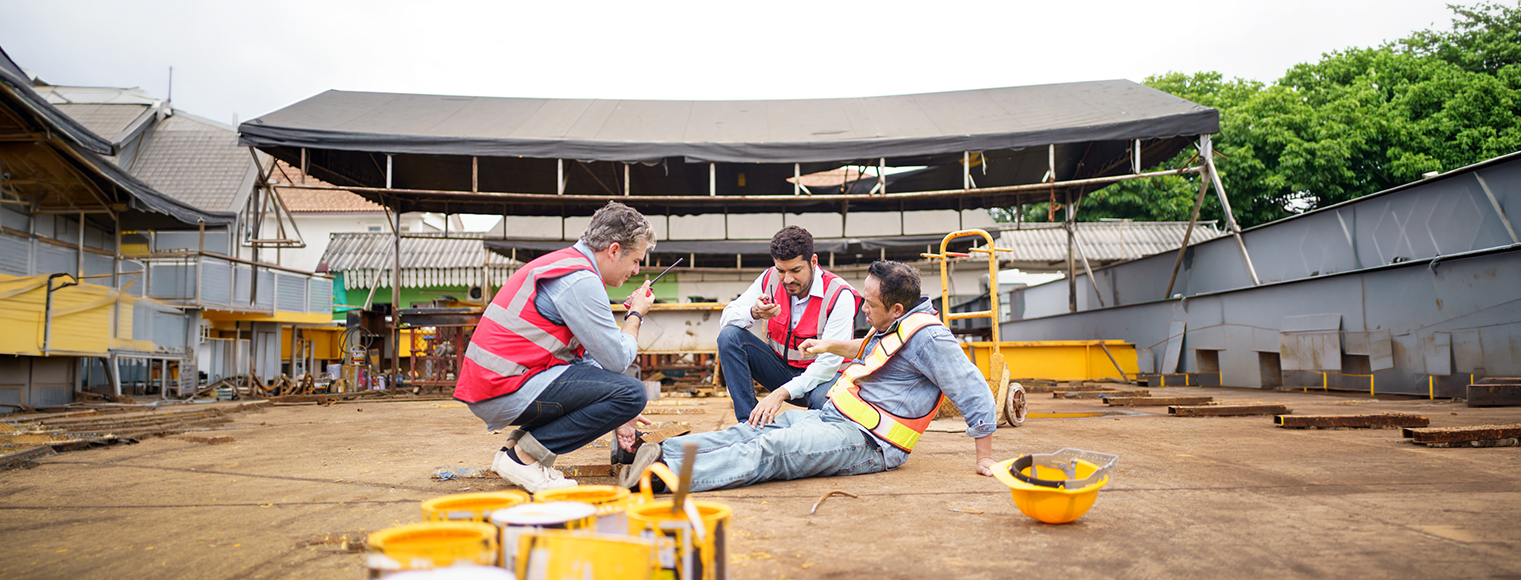
You filed the workers’ compensation claim. The checks started. Then someone mentioned that the general contractor might owe you something too, and nobody at the job site seems able to explain how that works.
Construction accidents kill more workers than any other private industry in the country. Construction has the most private industry workplace deaths of any sector, and the injuries that do not kill people end careers instead.
Here is what most injured workers are never told. Workers’ compensation is your only claim against your employer, but it is not your only claim. A Chicago construction accident lawyer looks past the employer to everyone else on that construction site.
In this post, you’ll learn:
- What causes construction accidents, and which hazards produce which injuries
- What workers’ compensation covers, and where it stops
- Who else may be liable on a construction site, and how a third-party claim works
- What compensation a construction accident claim adds, and who pays your medical bills
How Construction Accidents Happen on a Chicago Job Site
Construction accidents are rarely mysterious. The same handful of hazards produce most of them, year after year, on job sites that pass inspection right up until someone gets hurt.
What changes is who is responsible. A fall from an unguarded edge points at whoever controlled that edge, and on a busy construction site that is often not the injured worker’s employer.
Causes of Construction Accidents and the Focus Four
Federal enforcement data tells the story plainly. Fall protection drew 5,914 violations in a single fiscal year, making it the most cited standard in the country for the fifteenth year running.
The causes of construction accidents cluster tightly:
- Falls from height. Unguarded edges, floor openings, scaffolding, and ladders.
- Struck-by incidents. Falling tools and materials, swinging loads, heavy equipment in motion.
- Caught-in or between. Trench collapses, unguarded machinery, equipment rollovers.
- Electrocution. Live wires, damaged cords, contact with overhead power lines.
Those four account for the majority of deaths among construction workers. Behind each one sits a failure of safety protocols, missing proper safety equipment, or defective equipment that should have been tagged out.
Common Injuries in a Construction Site Injury Claim
The common injuries in construction work are more severe than in most industries because the forces involved are greater.
| Hazard | Typical injuries | Who is usually liable |
| Fall from height | Spinal cord injuries, traumatic brain injuries, broken bones | General contractor, scaffolding subcontractor |
| Struck by falling material | Traumatic brain injuries, crush injuries | Contractor who staged the load |
| Trench or wall collapse | Crush injuries, asphyxiation, severe injuries | Excavation contractor, site supervisor |
| Heavy equipment contact | Amputation, broken bones, internal injuries | Equipment operator’s employer, manufacturer |
| Electrocution | Burns, cardiac injury, nerve damage | Electrical subcontractor, property owner |
A construction site injury claim is valued on what the injuries leave behind. Spinal cord injuries and traumatic brain injuries carry lifetime costs, and those are the cases where workers’ compensation benefits fall furthest short of the actual loss.
Why Workers’ Compensation Is Not the End of a Construction Accident Claim
Exclusive remedy applies to your employer. It does not apply to anyone else.
The Illinois Workers’ Compensation Act expressly preserves the right to sue third parties who caused the injury. That is a separate personal injury claim, running on negligence, against whoever else on that construction site failed to keep it safe.
The Illinois Supreme Court clarified this in Munoz v. Bulley & Andrews, holding that a general contractor does not gain immunity merely by paying workers’ compensation premiums for a subcontractor’s crew. Only your immediate employer is immune.
A construction accident claim against a third party reaches damages workers’ compensation never touches.
The General Contractor and Retained Control
Illinois repealed its Structural Work Act in 1995, so construction accidents are now governed by ordinary negligence. The question courts ask is control.
A general contractor who retains control over the manner of the work owes a duty to the workers doing it. Retained control shows up in the contract, in site safety meetings, in the authority to stop work, and in who was responsible for inspecting the equipment that failed.
A general contractor who truly delegated everything may escape. One who ran daily safety briefings and never enforced them will not.
Property Owners, Equipment Makers, and the Construction Industry
Liability in the construction industry spreads further than most injured workers expect:
- The property owner. Premises liability applies when the owner controlled the conditions or knew about a safety hazard and failed to address it.
- Equipment manufacturers. Defective equipment supports a product liability claim, and that claim does not require proving anyone was negligent.
- Other subcontractors. The trade that staged materials badly, cut a guardrail, or left an opening uncovered.
- The construction company managing the site. Whoever held responsibility for safety regulations and safety protocols across trades.
Illinois uses modified comparative fault. An injured worker found more than 50 percent responsible recovers nothing, and anything at or below that reduces the award proportionally. Insurance companies raise worker fault early and often for exactly this reason.
One more thing worth knowing before you file a personal injury lawsuit. Your employer holds a lien on what you recover from a third party, meaning the workers’ compensation carrier gets reimbursed out of that settlement.
It still leaves most workers substantially ahead, but the net amount is not the gross number.
What a Construction Site Accident Investigation Uncovers
A construction-site accident scene lasts for hours. The trench gets backfilled, the scaffold comes down, the defective lift goes back to the rental yard, and the site looks nothing like it did when you were hurt.
That is why the first move in a construction accident claim is a preservation letter, not a demand letter.
What an investigation pulls:
- The OSHA file. Citations, the inspector’s narrative, and witness interviews. Illinois does not treat an OSHA violation as automatic negligence, but it is admissible as evidence of what occupational safety required.
- Contracts between the companies. Who agreed to control what tells you who owed a duty, and indemnity clauses show who ultimately pays.
- Safety training records. Whether the crew got proper training, whether proper safety equipment was issued, and whether protective equipment was actually available on site.
- Equipment history. Maintenance logs, inspection records, and recall notices on the machine involved.
- The site’s own documentation. Toolbox talk sign-ins, daily reports, and incident reports created before anyone lawyered up.
- Your medical records. The link between the accident and the injuries, documented from the first visit forward.
Photographs matter more here than in almost any other case. A construction site changes daily by design, so a photo taken the afternoon of the injury may be the only surviving record of a missing guardrail.
Seek medical treatment immediately and report the injury to your employer in writing. Illinois gives you a window to notify your employer of a workplace injury, and construction workers who tough it out for a week hand the insurance company its first argument.
Compensation in a Construction Accident Injury Case
A construction accident injury claim against a third party covers everything workers’ compensation leaves on the table.
What financial compensation covers:
- Medical expenses. Everything already spent, plus future medical expenses for surgeries, therapy, and equipment a doctor expects you to need.
- Lost wages. Not the two-thirds a comp check pays, but the full amount you would have earned.
- Future earning capacity. A journeyman who cannot climb again is no longer a journeyman, and the gap between what you earned and what you will earn is recoverable.
- Pain and suffering. The non-economic damages that construction accidents produce and workers’ compensation refuses to price.
- Loss of normal life. What the injury took outside of work, which Illinois recognizes as a separate element.
Severity drives everything. Construction accidents that produce spinal cord injuries or traumatic brain injuries generate life care plans running decades, and those figures dwarf anything a comp award reaches.
Anyone asking about average settlement amounts is asking the wrong question. Two workers with the same broken leg recover different amounts depending on their trade, age, prognosis, and the amount of insurance the responsible party carries.
Timing matters as much as severity. Settling a personal injury claim before your treatment is finished locks in a number built on incomplete information, and construction injuries have a habit of revealing themselves months later.
What a Construction Accident Attorney Does
Two claims run at once in these cases, and they pull against each other. The workers’ compensation claim needs to keep paying while the third-party case develops, and what you say in one proceeding shows up in the other.
Where a construction accident attorney spends the time:
- Running both tracks together. Protecting the comp benefits while building the construction accident claim, and keeping the testimony consistent across both.
- Finding every party with a policy. Contracts, certificates of insurance, and additional insured endorsements decide how much coverage actually exists.
- Preserving the site and the equipment. Letters go out in days, because construction workers lose evidence to the next phase of the build.
- Negotiating the comp lien down. The carrier’s reimbursement is often reducible, and that reduction goes straight into the worker’s pocket.
That last one is invisible from the outside and worth real money. A settlement that looks identical on paper produces very different results depending on what happened to the lien.
Experienced personal injury attorneys handle construction accidents on a contingency-fee basis, so a free consultation costs nothing, and there is no fee unless there is a recovery.
Common Questions About a Construction Accident Case
Do I lose my workers’ compensation if I file a lawsuit?
No. The two run side by side. A construction accident case against a third party does not affect your right to benefits, though your employer’s carrier holds a lien against whatever you recover.
Who pays in a construction injury claim if my employer was at fault?
Workers’ compensation does, and that is where it ends for the employer. A construction injury caused solely by your own employer generally produces no lawsuit, which is why identifying other parties on site matters so much.
How long do I have to file a third party claim in Illinois?
Two years from the date of injury for most construction accidents. The workers’ compensation deadline runs separately, so meeting one does not protect the other.
What if I am an undocumented worker?
Illinois law does not condition workers’ compensation or a personal injury claim on immigration status. Injured construction workers hold the same rights regardless.
Does an OSHA citation mean I automatically win?
No. Illinois treats an OSHA violation as evidence of the standard of care rather than automatic negligence. It helps considerably, but the case still has to be proven.
What if I was partly responsible for the accident?
You may still recover. Illinois bars recovery only when a worker is more than 50 percent at fault, and anything at or below that reduces the award rather than eliminating it.
Should I give a recorded statement to the insurance company?
Not before talking to a lawyer. The insurance company handling construction accidents asks questions designed to establish worker fault, and those answers are difficult to walk back.
Talk to a Chicago Construction Accident Lawyer
The comp checks arriving every two weeks are not the measure of what you lost. They were never designed to be.
Our team at Midwest Injury Lawyers handles construction accidents across Chicago, Hammond, and Joliet. We know how these job sites are contracted, which companies retain control on paper, and how quickly a construction site changes after someone is hurt.
Contact us now to talk through what happened. We will review the workers’ compensation claim, identify who else may be liable, and explain what a third-party case realistically adds. There is no cost to start and no fee unless we recover.