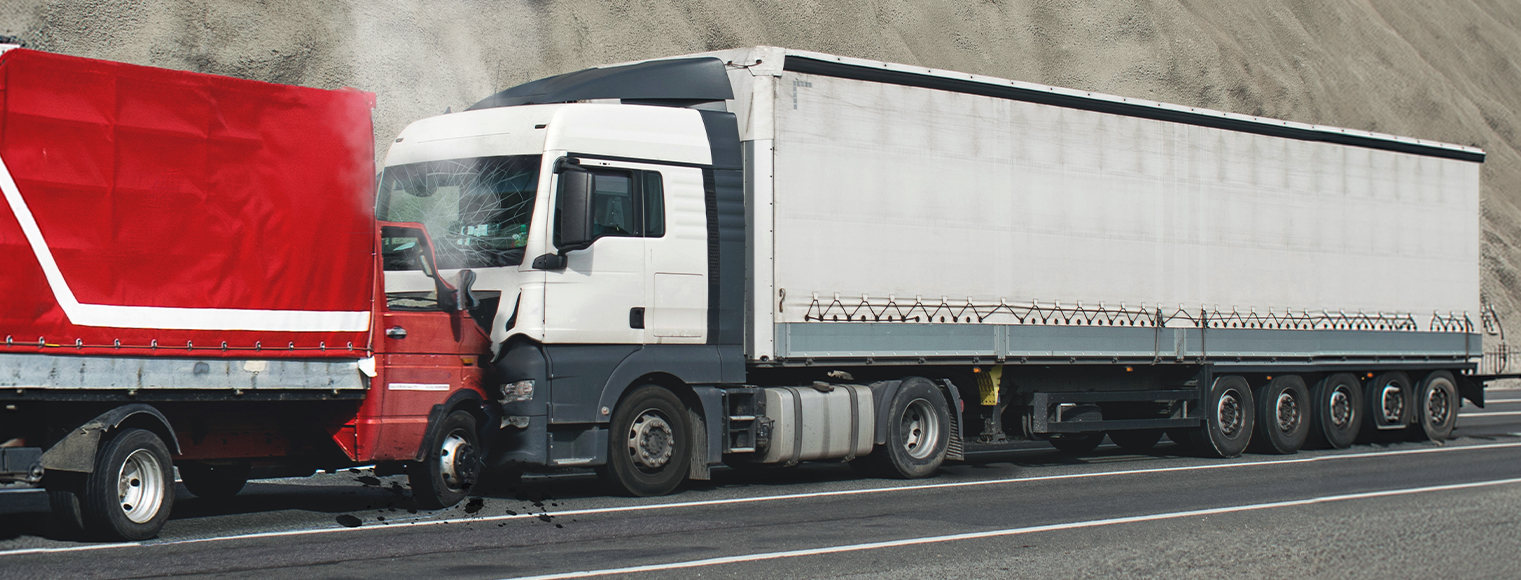
The truck that hit you was already in trouble. Weeks before the truck crash, a roadside inspector pulled the same vehicle over for brake violations. The driver had hours-of-service violations on his record. The trucking company put the truck back on the road anyway.
According to a 2025 US Compliance Services report, nearly 1 in 5 roadside inspections in fiscal year 2025 ended with an out-of-service order. Out-of-service violations are documented warnings that the trucking industry ignores at someone’s expense.
Knowing how those violations factor into a truck accident case changes everything about how the claim moves forward.
In this post, you’ll learn:
- What out-of-service violations are and how FMCSA enforces them
- Which common violations show up in truck accident claims
- How CDL violations and federal trucking regulations build the case
- Why an experienced truck accident attorney makes the difference
What Out-of-Service Violations Mean in a Truck Accident Case
Out-of-service violations are not minor paperwork issues. They are formal orders that pull a truck or its driver off the road due to safety risks. When one of these violations shows up in a trucking accident case, it changes the legal landscape.
According to FreightWaves’ 2026 CVSA Roadcheck report, the 2026 International Roadcheck Day 1 produced a 31.4 percent out-of-service rate. Nearly one in three inspected commercial trucks failed badly enough to be shut down on the spot.
How FMCSA Out-of-Service Violations Work
The Federal Motor Carrier Safety Administration sets the standards. State and federal inspectors issue out-of-service orders when commercial vehicles or drivers fall outside compliance.
FMCSA out-of-service violations include brake defects, hours-of-service violations, and CDL violations. The violation stays in the FMCSA Motor Carrier Management Information System. The record is public and admissible as evidence in a truck accident lawsuit.
Why These Violations Matter for a Truck Accident Lawsuit
A truck accident case is rarely about one bad moment behind the wheel. It is about a pattern of decisions that led to that moment. Out-of-service violations document the pattern. They show what the trucking company knew, when they knew it, and what they did or did not do in response.
That documentation shifts the negotiation. A truck accident attorney with prior violations on file builds a much stronger case for trucking company negligence than one starting from scratch.
Common Out-of-Service Violations That Show Up in Truck Accident Claims
Certain out-of-service violations recur in truck accident claims. The patterns are predictable. The categories drivers and trucking companies get cited for most often:
- Hours of service violations: drivers exceeding federal driving limits, falsifying logs, or skipping required rest breaks
- CDL violations: driving without a valid commercial driver’s license, operating outside license restrictions, or failing required testing
- Vehicle maintenance failures: brake defects, tire issues, lighting failures, and other mechanical violations on large trucks and dump trucks
- Truck driver violations covering driver fatigue, distracted operation, and other behaviors are cited at the roadside
- Electronic logging device violations: missing, tampered, or improperly maintained ELD records
- Drug and alcohol violations: failed tests, refusal to test, or driving while impaired
- Maintenance record gaps: missing or incomplete documentation of inspections and repairs
Each of these violations carries weight in a truck accident lawsuit. Multiple violations across multiple inspections often establish trucking company negligence beyond reasonable dispute.
How CDL Violations and Driver Fatigue Connect to a Truck Accident
CDL violations and driver fatigue accidents account for a large share of the most serious truck accident cases. The two issues overlap because the same drivers who ignore CDL rules often commit federal hours-of-service violations, too.
Hours of Service Violations and Truck Driver Fatigue Accidents
Federal hours-of-service rules limit how long a truck driver is allowed to be behind the wheel without rest. A driver who pushes past those limits operates an 80,000-pound vehicle on too little sleep. The result is slower reaction times and a much higher risk of catastrophic injuries.
Truck driver fatigue accidents are documented in hours-of-service logs and electronic logging device records. When the records show the driver was over hours at the time of the truck crash, the trucking accident liability story writes itself.
CDL Violations and Trucking Company Negligence
A commercial driver’s license is the first line of defense against unqualified drivers. CDL violations happen when a driver operates outside their license class, fails required testing, or works without a valid CDL altogether. Each one is a serious safety risk.
Trucking company negligence often shows up in how the company handled the driver. Hiring without proper verification and ignoring red flags in driver records point to systemic failures. The driver’s negligence and the company’s choices make both parties liable.
Federal Trucking Regulations and the Legal Process After a Crash
Federal trucking regulations are the backbone of every truck accident lawsuit. They establish the standards every driver and every trucking company must meet. Violations of those standards become the foundation of the legal process that follows.
Why Federal Regulations Matter in a Commercial Vehicle Accident
Federal regulations cover everything from driver qualifications to vehicle maintenance to insurance coverage. The Federal Motor Carrier Safety Administration enforces them through inspections, audits, and out-of-service orders. Violations point to negligence.
A truck accident attorney uses regulatory failures to show the trucking company chose risk over safety, and that choice led directly to the commercial vehicle accident.
Building the Legal Process Around Violations
The legal process in a trucking accident moves through evidence collection, expert review, and negotiation. Out-of-service violations, prior CSA scores, and FMCSA records are included. Maintenance records, driver logs, medical records, and accident scene documentation follow.
Each piece supports the others. Strong documentation puts the trucking accident on solid legal ground.
Truck Accident Evidence That Proves Out-of-Service Violations
Strong evidence from the truck accident makes the case. Without documentation, even clear violations get disputed. The table below shows the most important types of evidence and what each proves.
Trucking Accident Evidence Guide
| Evidence Type | What It Proves |
| FMCSA inspection records | Prior out-of-service violations and compliance history |
| Driver logs and electronic logging device data | Hours of service violations and driver fatigue |
| Maintenance records | Vehicle defects and ignored repair issues |
| CSA scores and safety measurement data | Pattern of trucking company negligence |
| CDL and qualification files | CDL violations and improper driver hiring |
| Accident scene photos and physical evidence | Crash dynamics and immediate post-crash conditions |
| Medical records and witness statements | Severity of injuries and independent accounts |
Each category builds on the others. A truck accident attorney pulls all of these as early as possible because some records get destroyed or overwritten within months of the crash. Gathering evidence quickly is essential.
How a Truck Accident Attorney Uses Violations to Pursue Compensation in Wrongful Death and Personal Injury Claims
A truck accident attorney uses out-of-service violations to build the strongest case for compensation. The violations are not just evidence of a bad day. They are evidence of a pattern that supports claims for wrongful death, personal injury, and every category of damages.
Establishing Trucking Accident Liability Through Violations
Trucking accident liability starts with showing who failed to meet their legal duty. Out-of-service violations make that showing easier. They establish documented failures by the driver, the trucking company, or both, often months before the crash itself.
The strongest cases tie specific violations to the specific cause of the crash. A driver flagged for hours-of-service violations falls asleep at the wheel. A truck is cited for brake defects that fail to stop in time. Each violation becomes a direct line to seeking compensation for the wreck.
Pursuing Trucking Accident Compensation From All Liable Parties
Trucking accident compensation comes from multiple sources. The truck driver, the trucking company, the maintenance provider, and the cargo shipper may all share liability. Identifying every responsible party expands the pool of available compensation.
A truck accident attorney pursues full compensation across medical bills, lost wages, future medical expenses, and pain and suffering. Severe injuries like spinal cord damage drive the truck accident case’s worth. An aggressive insurance adjuster strategy matters.
When Out-of-State Truck Accident Lawyers Get Involved in a Trucking Accident
Trucking accidents often cross state lines. A driver based in Texas hits a family in Illinois. A trucking company in Georgia operates fleets through Indiana. Out-of-state truck accident lawyers know how to handle the jurisdictional complications.
Federal trucking regulations apply nationwide, but each state has its own statute of limitations and comparative fault rules. Out-of-state truck accident lawyers coordinate with local accident lawyers and pursue every responsible party. The right team protects the full value of the case.
Common Questions About Out-of-Service Violations in Truck Accident Cases
How do out-of-service violations affect truck accident cases?
Out-of-service violations provide direct evidence of documented safety issues. They strengthen the case for trucking company negligence and increase the value of a truck accident claim. The more violations on record, the harder the defense fights back.
Can FMCSA violations help prove negligence after a truck accident?
Yes. FMCSA violations show federal safety standards were not met before the crash. A truck accident attorney uses them to demonstrate that the trucking company knew about the risk and failed to act.
Are trucking companies responsible for driver fatigue accidents?
Yes, in most cases. The company sets schedules and monitors compliance with hours-of-service requirements. When a fatigue-related crash happens, the company’s negligence is usually part of the liability picture, alongside the driver.
What evidence can support a trucking accident claim?
Strong evidence includes FMCSA inspection records, driver logs, electronic logging device data, and maintenance records. Witness statements, police reports, and prior out-of-service violations also build the case.
Why are federal trucking regulations important in accident cases?
Federal trucking regulations set the legal standard for safe trucking operations nationwide. Violations create clear evidence of negligence in a truck accident case. The regulations also apply across state lines.
Why an Experienced Personal Injury Lawyer at the Right Law Firm Matters for a Semi Truck Accident
A semi-truck accident is not a regular car accident involving larger vehicles. Federal regulations and layered liability make these cases more complex. An experienced personal injury lawyer at the right law firm knows where to look. The best law firms in this space treat every claim as a full investigation, not a routine file.
What an experienced personal injury law firm brings to a semi truck accident case:
- Knowledge of federal trucking regulations and how to use violations as evidence
- Immediate preservation requests for FMCSA records, driver logs, and electronic logging device data
- Investigation of trucking company negligence patterns through prior out-of-service violations
- Coordination with accident reconstruction experts and medical specialists
- Pursuit of every liable party, including the driver, the trucking company, and the cargo shipper
- Contingency fee basis representation with no upfront costs for accident victims and their family members
The right semi truck accident lawyer turns a complex case into a manageable one. The wrong choice leaves victims trying to fight a sophisticated defense alone.
Get a Free Case Evaluation From a Law Firm With a Proven Track Record
Out-of-service violations are evidence that the trucking industry hopes nobody pulls into the open. The right law firm pulls them anyway. Documented violations reshape what the insurance company is willing to pay, and they help truck wreck victims recover compensation.
At Midwest Injury Lawyers, we represent victims of trucking accidents with a proven track record of holding negligent carriers accountable. Our team handles every stage of the case, from the initial consultation to the preservation of FMCSA records. We will pursue maximum compensation.
Contact us today for a free case evaluation. You pay nothing unless we win, and we make sure no violation in the trucking company’s history goes unanswered.