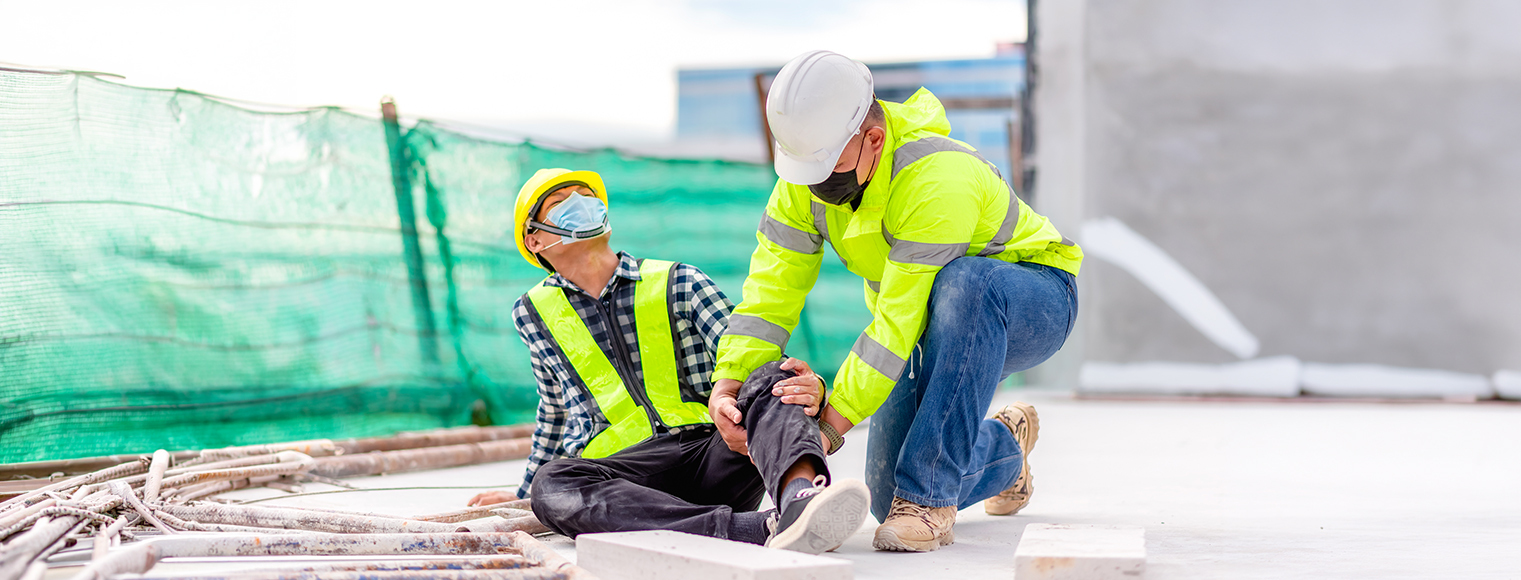
You went to work to earn a living, not to be carried off the job site on a stretcher. One fall from a scaffold, one swing of a load, and your whole life changes in a second. Now you are facing surgery, missed paychecks, and a future you did not plan for.
You are not alone in this. The construction industry is among the deadliest in the country, making up about one in five workplace deaths, according to the CDC. When a construction site cuts corners on safety, the workers pay for it.
Construction injuries are rarely simple. Workers compensation, third-party claims, and strict deadlines collide at once, which is why skilled construction accident lawyers matter. This guide explains your rights after a construction accident in Illinois, Indiana, and Wisconsin.
In this post, you’ll learn:
- What a construction accident claim actually involves
- How workers’ compensation and third-party claims differ
- What construction injuries qualify for permanent disability
- How the right lawyer builds your case
What Counts as a Construction Accident?
A construction accident is any injury that occurs on a job site or as a result of the work itself. Scaffolding accidents, collapsing trenches, electrocutions, and falling objects all qualify. So do injuries from defective tools, unsafe equipment, and a general contractor who ignored industry safety.
The setting matters less than the cause. Whether you work for a small crew or a large contractor, an injury tied to the job or the construction site will support a claim. What follows breaks down the injuries we see most and how they happen.
Common Construction Injuries
Construction accident injuries often cause serious injuries because the hazards are severe. Spinal cord injuries, traumatic brain injuries, broken bones, and other catastrophic injuries are common when a worker falls or a load gives way. These are not sprains you walk off in a week.
The damage often lasts a lifetime. A serious back or brain injury may end a trade career, which is why catastrophic construction accident injuries demand a full accounting of future medical expenses, lost earning power, and heavy medical bills, with injury severity directly affecting the value of those damages.
Crane Accidents, Falls, and the Fatal Four
Most deaths trace back to a handful of hazards. According to OSHA, the Fatal Four: falls, struck-by incidents, caught-in or between accidents, and electrocutions, cause roughly 60% of construction worker deaths.
Crane accidents, scaffolding accidents, and demolition accidents account for many struck-by and fall cases. Knowing the cause shapes the claim.
A fall from an unguarded ledge indicates a safety failure, and lift or exposed-shaft hazards may also lead to serious accidents. A crane failure often involves a defective machine or an untrained operator and might cause devastating injuries, each of which will widen the circle of responsibility.
Workers’ Compensation After a Construction Injury
In Illinois, Indiana, and Wisconsin, most injured construction workers start with workers’ compensation. It pays no matter who caused the accident, covering medical care and part of your lost wages while you recover. You do not have to prove your employer did anything wrong.
That no-fault trade-off has a cost. Workers’ compensation does not pay for pain and suffering, and it caps what you receive. For severe injuries, those limits leave a real gap between what you get and what you lost.
Filing a Workers’ Compensation Claim
A workers’ compensation claim runs on strict deadlines. Report the injury to your employer in writing, get medical attention right away, and keep every record tied to the accident. Missing a reporting window may sink an otherwise strong claim.
Insurance companies fight these claims more than people expect. They may dispute that the injury is work-related or push you back to the job too soon, which is where legal help protects your workers’ compensation benefits.
When You Have More Than Just Workers Compensation
Sometimes workers’ compensation is not your only option after a workplace accident. When someone other than your employer caused the harm, you may have a claim beyond the comp system, and that claim may reach the damages that comp ignores.
Think of a defective machine or a property owner who left a hazard. In those situations, a personal injury claim may be available because the harm arose from a third party’s negligence. This may help you pursue compensation beyond your workers’ compensation benefits.
Third-Party Construction Accident Lawsuit Claims
A construction accident lawsuit targets someone other than your employer. Workers’ compensation usually bars you from suing your own boss, but it does not protect a negligent third party. That distinction is where the real value of many claims lives.
Common targets include equipment makers, subcontractors, property owners, and engineers who signed off on an unsafe design. Unlike workers’ compensation, a third-party lawsuit lets you pursue the full range of damages, including pain and suffering.
How Construction Accident Victims Recover Compensation
Construction accident victims recover compensation by proving someone’s negligence caused the harm. Your construction accident lawyers gather the accident reports, equipment maintenance records, witness accounts, and OSHA findings that show what went wrong.
The stronger the proof, the more leverage you hold.
From there, the goal is to recover compensation for every loss. That means future medical expenses, lost wages, lost income, reduced earning power, and pain and suffering, the full weight of what the injury took from you.
How a Construction Injury Attorney Strengthens Your Claim
An experienced construction accident attorney does more than file paperwork. The right construction accident lawyers know how the industry works, where construction site safety gaps hide, and which records prove fault.
That knowledge carries construction accident cases from a low offer to a fair result.
Building the Case After Construction Injuries
These cases leave a trail. Experienced construction accident lawyers pull the incident reports, OSHA findings, and inspection logs, then tie them to the harm you suffered. Strong proof distinguishes injured construction workers who recover full compensation from those who settle for less.
Why Injured Workers Trust a Construction Accident Law Firm
A seasoned construction accident law firm levels a fight that is never fair at the start. Insurance companies have lawyers from day one, and so should you. Skilled construction accident attorneys put construction workers on equal footing with the industry’s biggest players.
How Most Construction Accidents Happen
Most construction accidents trace back to a short list of preventable industry hazards, and the same risks show up across many types of construction projects. Knowing which one caused your injury points to who may be responsible, from the general contractor to an equipment maker.
The table below breaks down the leading causes and the injuries they tend to produce.
|
Cause |
What Goes Wrong |
Common Injuries |
| Falls | Missing guardrails, unsafe scaffolding | Spinal cord and brain injuries |
| Struck-by | Falling objects, swinging loads, crane failures | Head trauma, fractures |
| Caught-in or between | Trench collapses, unguarded machinery | Crush injuries, amputations |
| Electrocution | Exposed wiring, contact with power lines | Burns, cardiac arrest |
A pattern runs through all of it. These crashes are not freak events, but the result of skipped industry safety steps, and that is exactly what turns an injury into a claim.
Who Is Liable for a Construction Site Accident?
Liability on a construction site is rarely limited to one party. A single construction accident may trace back to several parties, from construction companies and managers to equipment makers. It is a layered industry, and each layer owes a duty of worker safety to the crews on the job.
The General Contractor’s Duty
The general contractor sits at the center of most cases. A general contractor controls the construction site and the safety program. When safety rules are ignored, and a worker is hurt, that failure points back to the contractor.
Property Owners and Subcontractors
Others share the blame, too. A property owner who hides a hazard or a careless subcontractor might each be liable for a construction accident. Sorting out who controlled the work is how the responsible parties get named.
Equipment and Materials Makers
Defective gear adds another layer. When a faulty crane or unsafe materials cause the injury, the manufacturer is added to the list. The equipment maintenance records often show who failed the worker.
Why Construction Accident Cases Need a Law Firm
Construction accident cases are some of the hardest workplace injury claims to win alone. Two systems overlap, multiple parties point fingers, and insurance companies move fast to limit what they pay. A law firm that knows the industry keeps all of it from landing on you.
The right law firm earns its place in a few ways:
- Untangling workers’ compensation and third-party claims so workers injured may use both when available
- Naming every liable party, from the contractor to the manufacturer
- Valuing the full claim, including future medical costs, lost income, and earning power
- Standing between you and the insurance companies that want a quick, cheap deal
That work is the difference in most construction accident cases. With a seasoned law firm handling the claim, injured workers are able to pursue maximum compensation rather than accepting the first offer.
Common Construction Injury Questions
What benefits are available for permanently disabled construction workers?
Permanently disabled construction workers may receive ongoing workers’ compensation benefits, including partial or total disability payments and lifetime medical care for the injury. A third-party claim might add pain and suffering and lost earning power on top.
How is permanent disability determined after a construction accident?
A doctor assigns an impairment rating once you reach maximum medical improvement, the point where your condition is stable. That rating, your job duties, and your wages shape the disability award. Disputes over the rating are common, and that’s where a lawyer will protect your claim.
What evidence is needed to support a permanent disability claim?
You need medical records, the impairment rating, imaging, and often expert testimony tying the injury to your limits. Proof of your wages and job demands shows what the disability costs you. The accident reports and witness accounts round out the picture.
What construction injuries qualify for permanent disability benefits?
Spinal cord injuries, traumatic brain injuries, amputations, severe burns, and crush injuries often qualify. So might repetitive trauma that ends a trade career. The test is whether the injury permanently limits your ability to work, not the label on it.
Can you return to work after receiving permanent disability benefits?
Sometimes, yes. Many workers return to a lighter role while still receiving partial disability for what they lost. Going back to work does not automatically end your benefits, though it may change the amount you receive, so check with a lawyer first.
Talk to Our Construction Accident Attorneys
A construction injury could take your health, your paycheck, and your sense of what comes next. You did your job. Someone else cut a corner, and now you are the one paying for it. The law gives you a way to hold them accountable, and the clock on that right is already running.
At Midwest Injury Lawyers, our construction accident attorneys fight for injured workers across Illinois, Indiana, and Wisconsin. We sort out your claims, name every party that failed you, and push for the full compensation you deserve.
Contact us today for a free consultation. A free consultation tells you where you stand, and it costs you nothing. You pay nothing unless we win, so there is no risk in finding out what your claim is worth.