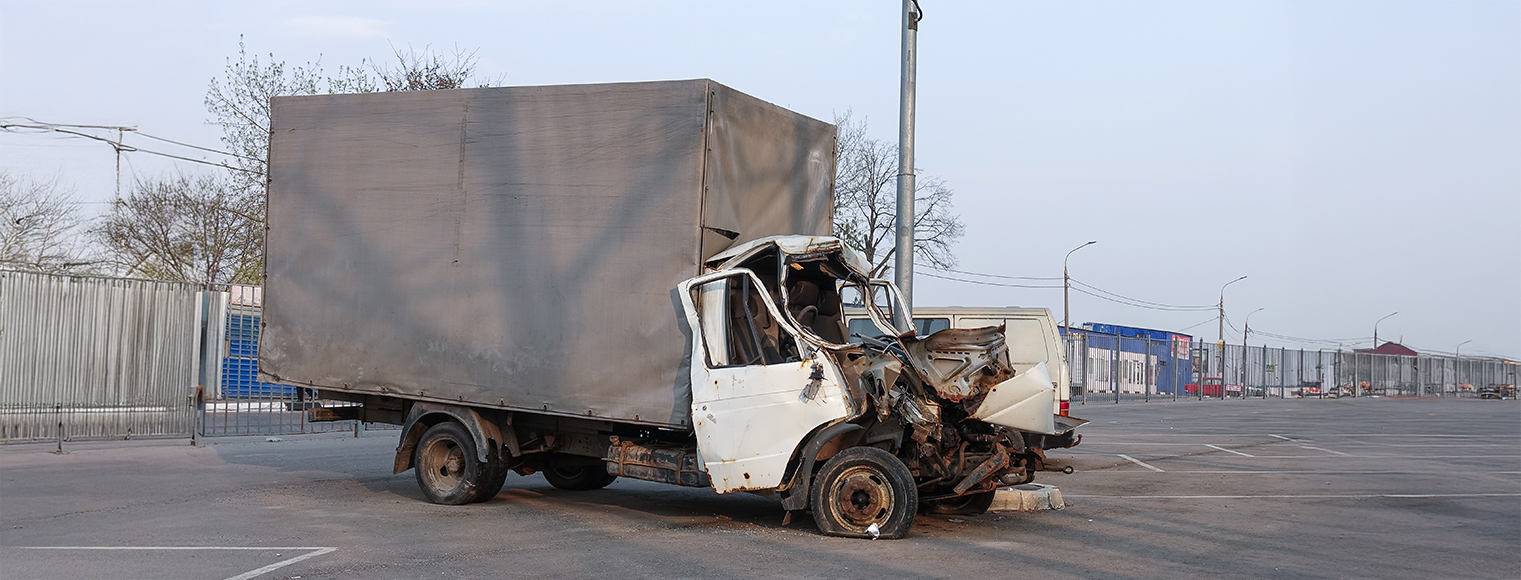
Imagine a truck driver behind the wheel of an 80,000-pound rig on their first solo route.They miss a braking distance. They misjudge a turn. Seconds later, multiple lives are changed.
Truck accidents involving underqualified drivers rarely start on the road. They begin with rushed training, incomplete licensing, and decisions made long before a truck ever leaves the yard.
According to the Federal Motor Carrier Safety Administration, driver-related factors are cited in nearly one-third of large truck crashes, underscoring how qualification and oversight directly affect safety outcomes in a serious truck accident.
When a truck driver lacks proper credentials or experience, liability questions become more complex. Indiana truck accident claims involving underqualified drivers often require deeper investigation and detailed records.
These cases also demand an understanding of state and federal trucking regulations that govern commercial vehicles, semi-trucks, and tractor-trailers.
In this guide, we’ll cover:
- How Indiana law defines truck driver negligence
- What makes a commercial driver legally underqualified
- How liability is investigated in serious truck accidents
- When a truck accident lawyer helps
How Indiana Law Determines Truck Driver Negligence
Indiana law evaluates negligence by asking whether a driver acted with reasonable care under the circumstances. In truck accident cases, that standard is shaped by the size, weight, and risk involved in operating large commercial vehicles.
Commercial truck drivers are held to a higher duty of care than ordinary motorists. They are expected to follow Indiana traffic laws and comply with federal regulations governing training, licensing, inspection, and operation.
When those standards are not met, driver negligence may be established even if the violation did not, in and of itself, cause the truck accident.
Negligence must also be tied to harm. Indiana law requires a clear connection between a driver’s conduct and the injuries that followed. In cases involving underqualified drivers, that connection often emerges through a thorough investigation conducted by experienced truck accident lawyers.
Gaps in training, improper licensing, or ignored safety requirements can explain why a crash occurred and why the consequences were severe, including serious injury or catastrophic injuries to occupants of passenger vehicles.
What Makes a Truck Driver “Underqualified”
An underqualified truck driver is rarely the result of a single oversight. In many truck accident cases, underqualification reflects multiple failures that existed long before the crash. These issues often surface only after records are reviewed and responsibilities are examined.
Several types of deficiencies commonly appear when a truck driver lacks proper qualifications:
- Licensing and endorsement failures
- Inadequate training or experience
- Safety and compliance violations
Lack of Proper Licensing or Endorsements
Commercial truck drivers must hold the correct class of commercial driver’s license for the vehicle they operate. Certain loads also require additional endorsements. When a driver operates without proper credentials, that failure will support a finding of truck driver negligence.
Expired licenses, suspended credentials, or missing endorsements raise serious concerns. These issues suggest that the driver may not have met the minimum legal requirements at the time of the crash. In Indiana, operating a semi truck or other commercial vehicle without proper licensing can significantly affect liability analysis.
Inadequate Training or Experience
Proper licensing alone does not make a driver qualified. Truck drivers must also receive adequate training for the vehicles, loads, and routes they are assigned. Gaps in training often involve new drivers, unfamiliar equipment, or high-risk driving conditions.
Inexperienced drivers may struggle with braking distances, load shifts, jackknife accidents, or complex traffic environments. When training records are incomplete or nonexistent, it raises questions about whether the driver was prepared to operate safely.
These failures often point back to broader oversight issues within the trucking company and may support claims involving negligent hiring or negligent retention.
Safety and Compliance Violations
Federal and state safety rules exist to reduce risk on the road. Violations of hours-of-service limits, inspection requirements, distracted driving rules, or safety regulations can signal that a driver was not properly supervised or qualified.
Repeated or unresolved violations matter. They show patterns of noncompliance rather than isolated mistakes. In truck accident cases involving underqualified drivers, these violations often help explain why a crash occurred and why its consequences were severe.
Investigating Liability in Underqualified Driver Truck Accidents
Liability in truck accident cases is not determined at the crash scene alone. Investigations often extend beyond police reports and witness statements. When an underqualified driver is involved, attention shifts to records, oversight, and decisions made before the collision.
What Investigators Look for Beyond the Crash
Investigators review how the driver was hired, trained, and supervised. Driver qualification files, licensing records, training logs, safety histories, and compliance documents help show whether minimum standards were met.
That documentation can reveal whether the driver should have been on the road at all and whether the trucking company met its legal duty under state law and federal trucking regulations.
Liability often turns on what those records contain. Missing documents, incomplete training histories, or ignored violations can expand the scope of responsibility. In underqualified driver cases, those details frequently shape the strength of a personal injury claim and determine which evidence carries the most weight.
Evidence That Matters in Underqualified Driver Truck Accident Claims
Truck accident cases involving underqualified drivers are built on records, not assumptions. Liability is rarely established by a single piece of evidence. Instead, it emerges from how documentation reveals patterns of oversight, missed requirements, and preventable risks that existed before the crash.
These cases often turn on what the trucking company knew, or should have known, about the driver’s qualifications. Employment decisions, training practices, and compliance history become central.
The stronger the paper trail, the clearer it becomes whether a driver was placed on the road without meeting legal or safety standards.
The table below outlines the types of evidence that commonly shape underqualified driver truck accident claims and why each one matters during investigation and litigation.
| Evidence Type | What It Shows | Why It Matters |
| Driver qualification file | Licensing status, certifications, and medical clearance | Shows whether the driver met the minimum legal requirements |
| CDL and endorsement records | Proper class and endorsements for the vehicle and load | Helps establish whether the driver was legally authorized to operate |
| Training and supervision logs | Instruction provided and oversight practices | Reveals gaps in preparation or supervision |
| Employment history | Hiring decisions and prior experience | May show negligent hiring or retention |
| Electronic logging device (ELD) data | Hours-of-service compliance | Indicates driver fatigue or regulatory violations |
| Company safety records | Prior violations and corrective actions | Shows patterns of noncompliance or ignored risks |
No single record determines liability on its own. These cases are evaluated by looking at how documentation fits together over time.
When records align, they can clearly demonstrate that a driver was underqualified and that responsibility extends beyond the individual behind the wheel.
Who Can Be Held Liable Beyond the Truck Driver
Truck accident cases involving underqualified drivers rarely stop with the driver alone. These crashes often reflect decisions made long before the collision occurred. Liability can extend to multiple parties responsible for putting an unqualified driver on the road.
When Company Decisions Create Risk
Trucking companies are frequently central to these cases. They are responsible for hiring qualified drivers, providing proper training, and enforcing safety standards.
When a company fails to verify credentials, overlooks training gaps, or ignores compliance issues, it may share responsibility for the harm that follows, including medical expenses, lost wages, and long-term medical costs.
Other Parties That May Share Liability
Other negligent parties may also be involved. Staffing agencies, third-party contractors, cargo loaders, or entities responsible for driver placement can contribute to qualification failures.
Identifying all responsible parties matters. It affects how liability is allocated and how claims are pursued. In underqualified driver cases, understanding the full scope of responsibility often determines whether accident victims can pursue compensation fully and fairly.
How Indiana Truck Accident Laws Shape the Legal Process
Truck accident claims in Indiana are governed by state-specific legal rules. These rules affect how fault is evaluated, how long injured parties have to act, and how liability is ultimately resolved.
In cases involving underqualified drivers, those details matter early in the legal process.
How Fault Is Evaluated in Indiana
Indiana follows a modified comparative fault system. An injured person may recover damages as long as they are not more than 50 percent at fault.
Fault allocation plays a major role in truck accident cases, especially when evidence shows that a driver should not have been operating the vehicle in the first place.
Deadlines and Procedural Limits
Timing is critical. Indiana law limits the time within which a personal injury lawsuit may be filed.
Delays can affect more than deadlines. They can lead to lost records, missing documentation, and weakened leverage when dealing with trucking companies and insurance adjusters.
When State and Federal Rules Overlap
Indiana truck accident cases often involve overlapping legal standards. State negligence law applies alongside federal trucking regulations.
That interaction can complicate underqualified driver claims, particularly when licensing, training, or compliance failures are uncovered during investigation.
Common Failure Points in Underqualified Driver Truck Accident Cases
Underqualified driver truck accident cases do not turn on unclear injuries. They weaken when early decisions limit what can be examined and preserved.
These issues often develop quietly, before liability is fully understood.
Where Early Liability Analysis Falls Short
Underqualified driver cases often involve multiple parties. When early analysis focuses only on the driver, broader failures may remain unaddressed.
Hiring practices, training gaps, and supervision issues can go unnoticed, even when they contribute to putting an unqualified driver on the road.
How Insurance Narratives Take Shape Early
Trucking companies and insurers begin shaping their position soon after a crash. Underqualification issues are often reframed as routine driver error, reckless driving, or distracted driving.
Once that narrative takes hold, it becomes harder to shift attention to deeper qualification and oversight failures.
Why Evidence Preservation Becomes a Pressure Point
Key records are not preserved automatically. Driver qualification files, black box data, electronic logging data, and internal company documents can be lost or overwritten. Delays in securing evidence can permanently limit what can be proven, even when negligence exists.
These issues often determine how a case unfolds long before settlement discussions begin. Addressing them early can make the difference between a narrowly framed claim and one that reflects the full scope of responsibility.
How Underqualified Driver Cases Are Built
Underqualified driver truck accident cases are not routine claims. They involve more than what happened at the crash scene.
Liability often turns on hiring decisions, training failures, supervision gaps, and compliance issues that existed long before the collision.
Evidence That Shapes These Claims
These cases require deeper investigation. Driver qualification files, training records, safety histories, black box data, and internal company policies must be reviewed together.
Missing or incomplete records can limit what can be proven, even when serious violations exist.
Why Early Framing Matters
Trucking companies and insurers understand this risk. They often move quickly to narrow responsibility and frame crashes as isolated driver error.
Without experienced legal representation, broader failures may never be examined.
The Role of Experienced Legal Counsel
An experienced truck accident attorney understands where underqualification issues are hidden. They know how Indiana negligence law intersects with federal trucking regulations.
That knowledge matters when determining whether responsibility extends beyond the driver to the companies that put an unqualified person on the road.
Experienced Legal Action and Its Impact on Truck Accident Claims
Underqualified driver truck accident cases are shaped early. Decisions made in the first days after a crash often determine how liability is framed, what evidence survives, and how insurers ultimately value a claim.
Early legal involvement changes that balance. The team at Midwest Injury Lawyers understands how quickly trucking companies and insurers move to protect themselves. Acting fast allows their attorneys to preserve driver qualification files, training records, compliance histories, and electronic data before narratives harden and key information disappears.
If you were injured in a truck accident involving an underqualified driver, timing matters. Protect your claim, preserve evidence, and pursue the full compensation your case may support. Contact us now!